
Choosing an art medium is one of the most important decisions a beginner artist makes—and one of the most misunderstood. Many people assume they need to try everything at once or that the “right” medium will reveal itself immediately. In reality, choosing an art medium is less about talent and more about understanding how different materials behave, what they teach, and how they align with the way you naturally like to work.
This guide breaks down the most popular art mediums for beginners, explains what each one offers, and helps you choose the right medium for your creative style—without overwhelm.
Why Your Art Medium Matters More Than You Think
An art medium is not just a tool; it’s a teacher. Each medium:
-
Encourages certain habits
-
Demands different levels of control
-
Shapes how you think about process and mistakes
Professional artists don’t choose mediums randomly—they choose based on how they want to work, what they want to express, and how much control or spontaneity they need.
For beginners, the goal isn’t permanence. It’s learning clarity.
Start With One Medium (Yes, Really)
One of the fastest ways to stall your progress is by switching mediums too often. While experimentation is valuable, depth creates confidence.
Focusing on one medium allows you to:
- Understand cause and effect
- Build muscle memory
- Develop visual language
- Learn how materials respond to your decisions
Once fundamentals are strong, transitioning to other mediums becomes much easier.
Start With One Medium (Yes, Really)
One of the fastest ways to stall your progress is by switching mediums too often. While experimentation is valuable, depth creates confidence.
Focusing on one medium allows you to:
- Understand cause and effect
- Build muscle memory
- Develop visual language
- Learn how materials respond to your decisions
Once fundamentals are strong, transitioning to other mediums becomes much easier.
Popular Art Mediums Explained
Drawing (Graphite & Pencil)
Best for: Observation, structure, control, fundamentals
Skill focus: Line, proportion, value
Drawing is often the best starting point because it strips art down to essentials. With minimal tools, you learn how to see, measure, and translate the world onto a surface.
Why professionals still draw:
Drawing sharpens visual thinking and remains foundational at every level of artistic practice.
Ink (Pen, Brush Pen, Ink Wash)
Best for: Confidence, decisiveness, expressive mark-making
Skill focus: Line economy, contrast, composition
Ink teaches commitment. There is little room for correction, which encourages intentional mark-making and trust in your process.
Good to know:
Ink rewards patience and planning—but also embraces imperfection.
Acrylic Painting
Best for: Versatility, layering, experimentation
Skill focus: Color mixing, form, technique control
Acrylic paint is forgiving, fast-drying, and adaptable. It can mimic watercolor or oil techniques depending on how it’s used.
Why beginners like it:
Mistakes can be painted over, and results feel immediate.
Watercolor Painting
Best for: Fluidity, transparency, patience
Skill focus: Water control, timing, restraint
Watercolor is beautiful but demanding. It teaches artists to work with the medium instead of forcing it.
Professional insight:
Watercolor strengthens decision-making and sensitivity to materials—but requires letting go of control.
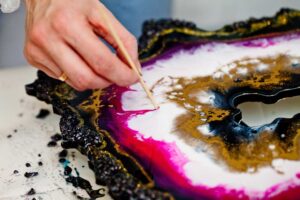
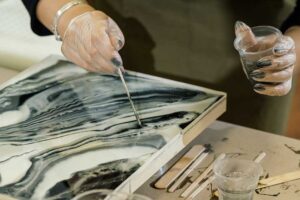
Mixed Media
Best for: Exploration, texture, experimentation
Skill focus: Material interaction, layering logic
Mixed media combines multiple materials into one piece. While exciting, it can be overwhelming for beginners if fundamentals aren’t established.
Recommendation:
Explore mixed media after gaining confidence in at least one primary medium.
How to Match a Medium to Your Creative Style
Ask yourself:
- Do I prefer structure or spontaneity?
- Do I like fixing mistakes or working with them?
- Do I enjoy slow processes or fast results?
If you like control and structure: Drawing or acrylic
If you enjoy expressive, bold marks: Ink or acrylic
If you value softness and flow: Watercolor
If you like experimentation: Acrylic or mixed media
There is no “better” medium—only better alignment.
Common Beginner Mistakes When Choosing a Medium
- Choosing based on trends instead of interest
- Switching mediums too quickly
- Expecting instant results
- Using poor-quality materials that distort learning
Professionals avoid these by choosing intentionally and committing to the process.
When to Expand Into New Mediums
You’re ready to explore new mediums when:
- You understand your current tools
- You can predict outcomes reasonably well
- You want to apply learned skills in new ways
Growth comes from informed exploration, not constant change.
Final Thoughts: Let the Medium Work With You
The right art medium doesn’t make art easier—it makes learning clearer. When your materials align with how you think and work, progress feels more natural and frustration decreases.
Choose thoughtfully. Commit fully.
Your style will follow.