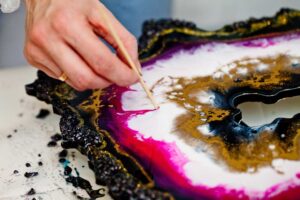
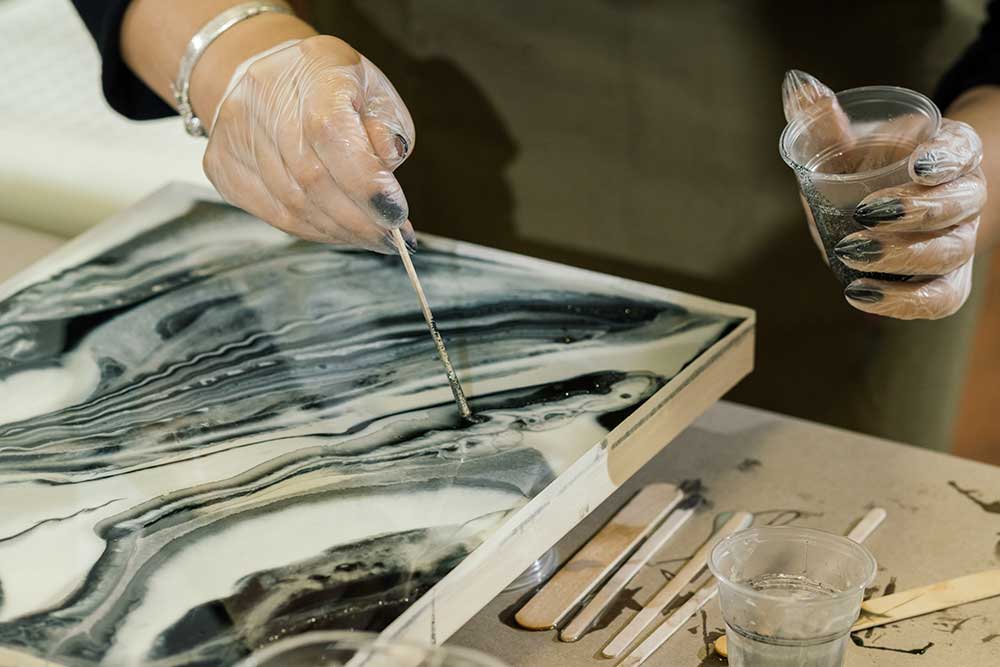
Resin art has surged in popularity over the last decade, captivating artists and collectors alike with its glossy finishes, dramatic depth, and almost glass-like appearance. From abstract pours and ocean scenes to functional objects and mixed-media works, resin offers visual impact that few materials can match.
But while resin art is often marketed as exciting and accessible, it also comes with technical challenges, safety considerations, and creative limitations that aren’t always discussed upfront.
This article explores the pros and cons of resin art, helping beginners and developing artists understand whether resin is the right medium for their creative goals.
What Is Resin Art?
Resin art typically involves the use of epoxy resin, a liquid material that cures into a hard, glossy surface when mixed with a hardener. Artists often combine resin with pigments, inks, paints, or embedded materials to create layered, high-impact works.
Resin can be used on:
- Canvas or wood panels
- Tabletops and furniture
- Jewelry and decorative objects
- Mixed-media artworks
While visually striking, resin behaves very differently from traditional art materials like paint, ink, or clay.
The Pros of Resin Art
1. High Visual Impact
One of resin art’s biggest advantages is its finish. Resin creates:
- A smooth, glass-like surface
- Rich color depth
- Dramatic layering effects
For artists interested in bold, contemporary aesthetics, resin delivers immediate visual appeal.
2. Unique Depth and Dimension
Resin allows for layering in a way that few mediums can replicate. Artists can suspend pigments, objects, or textures between layers, creating a sense of depth that feels immersive and three-dimensional.
This makes resin especially popular for:
- Abstract art
- Ocean-inspired pieces
- Mixed-media works
3. Durability Once Cured
When properly mixed and cured, resin forms a strong, protective surface that resists moisture and surface wear. This durability makes it appealing for:
- Functional art
- Decorative surfaces
- Pieces exposed to light handling
4. Expands Creative Possibilities
Resin allows artists to experiment beyond traditional brushwork. It encourages:
- Flow and movement
- Unpredictable effects
- Non-traditional mark-making
For artists who enjoy experimentation, resin can feel freeing and exciting.
The Cons of Resin Art
1. Safety and Health Concerns
One of the most important drawbacks of resin art is safety.
Resin requires:
- Proper ventilation
- Protective gloves
- Respiratory precautions
Fumes and skin contact can be harmful if handled improperly. This makes resin less accessible for artists working in small or shared spaces.
2. Steep Learning Curve
Despite its popularity, resin is not an easy medium to master. Common challenges include:
- Incorrect mixing ratios
- Air bubbles
- Uneven curing
- Dust contamination
Mistakes can permanently affect a piece, and corrections are often difficult or impossible once resin sets.
3. Limited Control Compared to Traditional Media
Resin is partially self-directing. While this can create beautiful effects, it also reduces precision.
Artists who prefer:
- Fine detail
- Controlled mark-making
- Predictable outcomes
may find resin frustrating rather than expressive.
4. Cost of Materials
Resin art can become expensive quickly. Costs include:
- Resin and hardener
- Pigments and additives
- Safety equipment
- Disposable tools and supplies
Compared to drawing or painting, resin has a higher barrier to entry.
5. Environmental Considerations
Resin is a synthetic, plastic-based material that:
- Is not biodegradable
- Produces waste
- Has environmental impact
Artists increasingly weigh these concerns when choosing long-term materials.
Resin Art vs Traditional Art Mediums
Resin differs fundamentally from traditional art forms:
- It prioritizes surface and finish
- It limits revision once cured
- It emphasizes process over drawing or brushwork
Because of this, resin works best when treated as its own discipline—not as a replacement for foundational art skills.
Who Resin Art Is Best For
Resin art may be a good fit if you:
- Enjoy experimentation and unpredictability
- Are comfortable with technical processes
- Have proper workspace ventilation
- Are drawn to contemporary, high-gloss aesthetics
It may not be ideal if you:
- Prefer traditional drawing or painting
- Need portability or minimal setup
- Want precise control over every mark
- Are sensitive to chemicals or fumes
Final Thoughts: Is Resin Art Worth Exploring?
Resin art is neither a shortcut nor a trend—it’s a distinct medium with its own strengths and limitations. When approached thoughtfully and safely, it can produce striking, modern artwork. When approached casually or without preparation, it can be frustrating, costly, and even hazardous.
Like any medium, resin rewards artists who respect its properties, understand its constraints, and choose it intentionally.
The best art materials don’t just look impressive—they support the way you want to create.